



Install Steam
login
|
language
简体中文 (Simplified Chinese)
繁體中文 (Traditional Chinese)
日本語 (Japanese)
한국어 (Korean)
ไทย (Thai)
Български (Bulgarian)
Čeština (Czech)
Dansk (Danish)
Deutsch (German)
Español - España (Spanish - Spain)
Español - Latinoamérica (Spanish - Latin America)
Ελληνικά (Greek)
Français (French)
Italiano (Italian)
Bahasa Indonesia (Indonesian)
Magyar (Hungarian)
Nederlands (Dutch)
Norsk (Norwegian)
Polski (Polish)
Português (Portuguese - Portugal)
Português - Brasil (Portuguese - Brazil)
Română (Romanian)
Русский (Russian)
Suomi (Finnish)
Svenska (Swedish)
Türkçe (Turkish)
Tiếng Việt (Vietnamese)
Українська (Ukrainian)
Report a translation problem


 As the year comes to an end, we wanted to share the current state of the Rails and Roads Rework and what it enables going forward.
 For those who joined us recently, it’s worth explaining why this rework is happening at all.
 Level crossings have been one of the most requested features for a long time, and their absence has been a major pain point for many players.
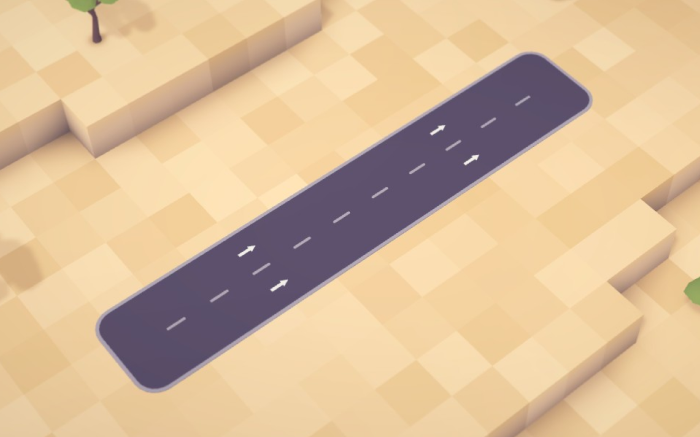 One-way roads are now supported and allow players to control traffic flows much more precisely. This makes it easier to design efficient layouts, reduce congestion, and guide vehicles where they’re actually needed.
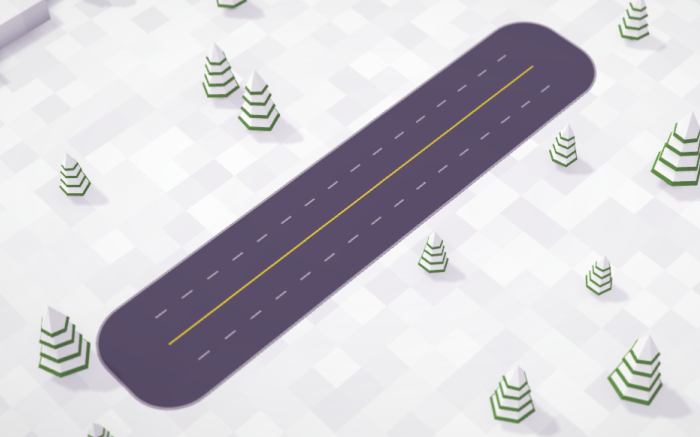 Support for multi-lane roads is now part of the underlying system. We’re still not fully sure in what form — or even whether — multi-lane roads will make it into the base game, but having this support gives us much more flexibility going forward. It has also allowed us to actively test the limits of the new system and better understand how far it can be pushed.
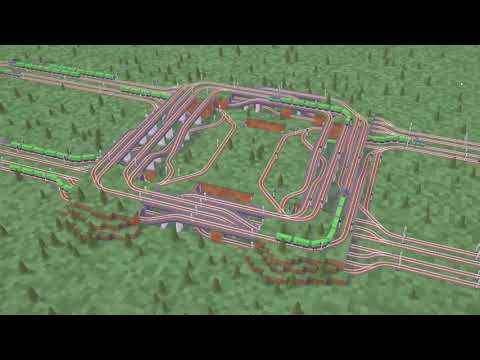
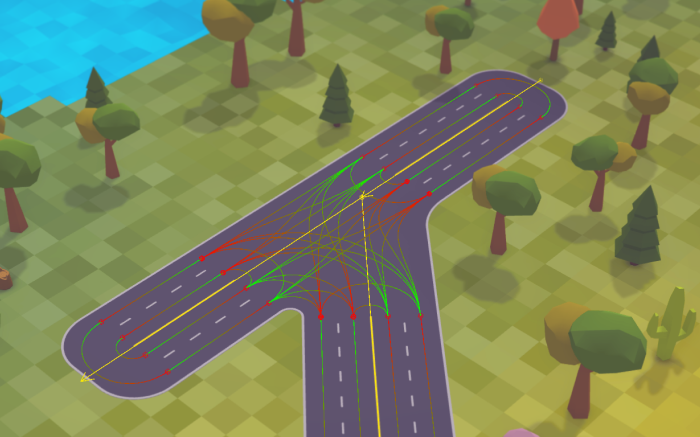 The new junction system supports fully procedural junctions at arbitrary angles — technically anywhere within 360 degrees, not just a fixed set of directions. In practice, intersections in the game follow the grid, so players normally build junctions at 90° or 45°. At the same time, supporting arbitrary angles is necessary to handle more complex layouts and edge cases internally.
 This flexibility makes it possible to support some fairly unusual combinations — for example, rails crossing over conveyors — while still behaving in a clean and consistent way.

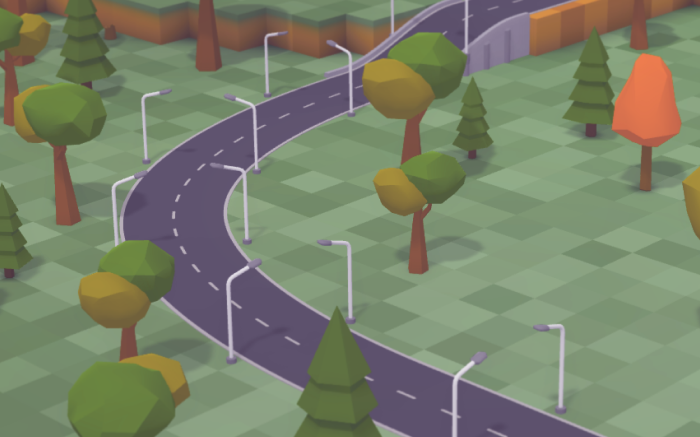
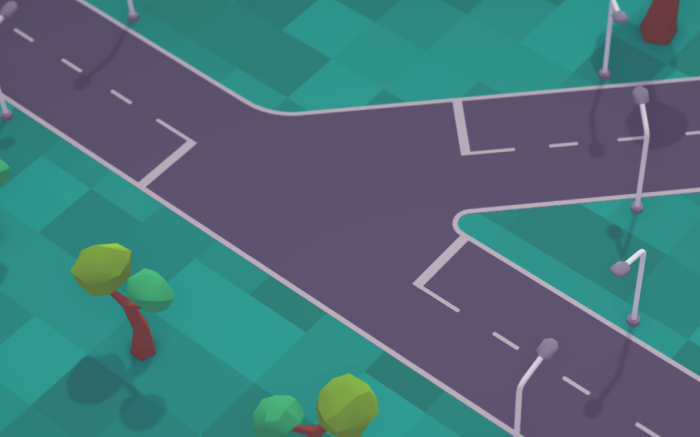 Lane markings, poles, and other road details are being integrated directly into the system instead of being separate hacks. These elements now follow the same rules as the roads themselves, align correctly with geometry, and adapt automatically to different layouts. This improves visual consistency and makes it much easier to extend and refine road visuals in the future without adding special cases.
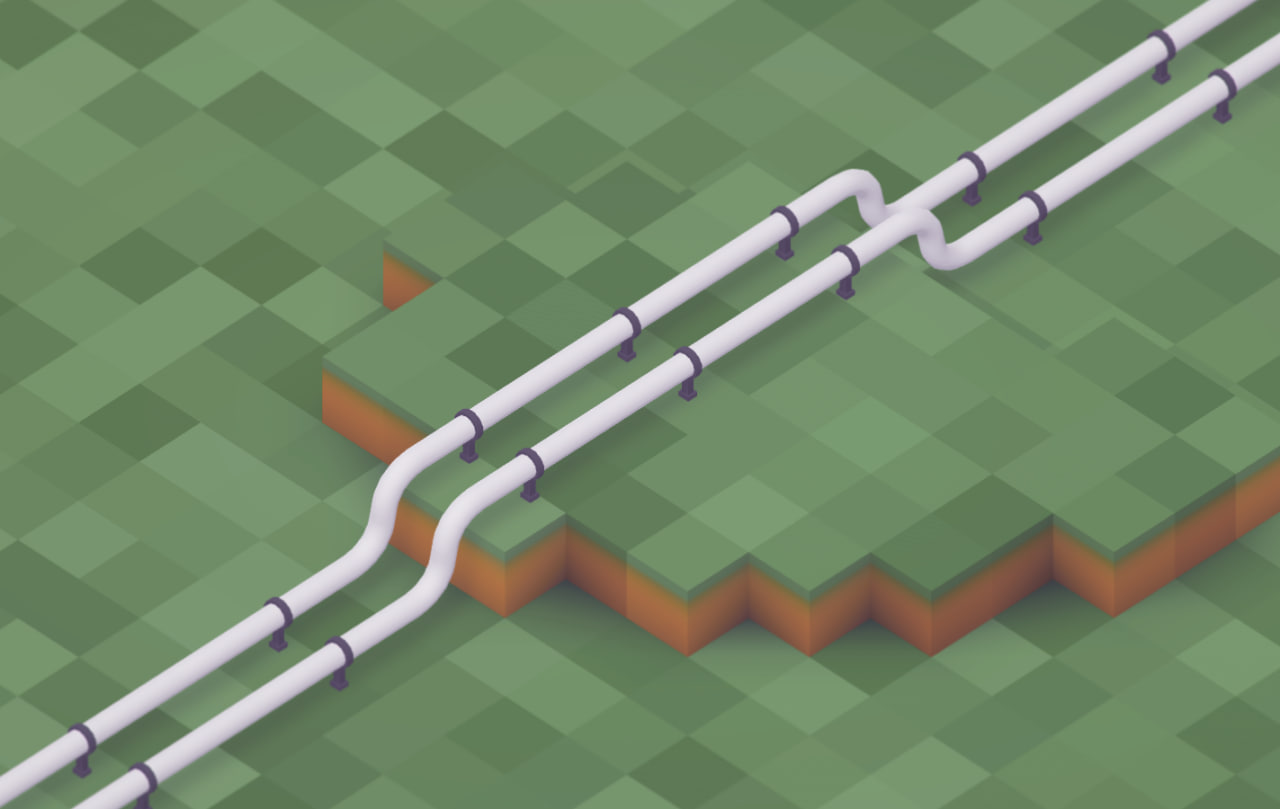 With the new system in place, supporting pipes becomes largely trivial from a technical standpoint. They can be generated properly, bend smoothly, and integrate naturally with the rest of the infrastructure. This finally opens the door to entirely new mechanics, such as working with liquids.
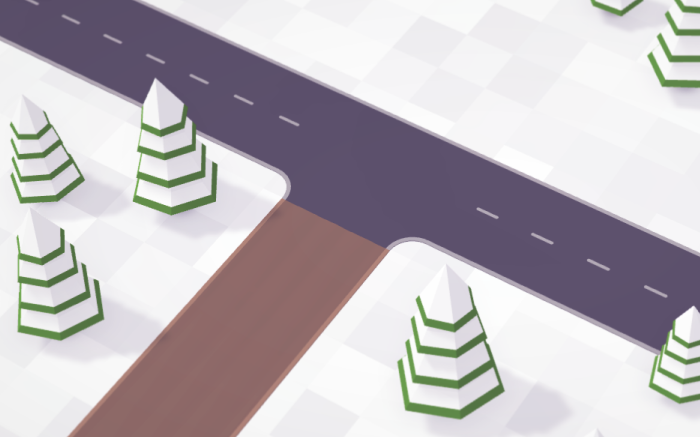 A common source of frustration in the current version of the game has been problems with connecting different road segments in clean and predictable ways. This was a direct consequence of how rigid the old road system was. The new system eliminates this class of issues by design, allowing different road pieces and intersections to connect cleanly and predictably — including support for the infamous one-tile shifts that were previously impossible.
 It also makes it possible to connect different types of roads together in a consistent and reliable way, something that was very hard to achieve with the old system.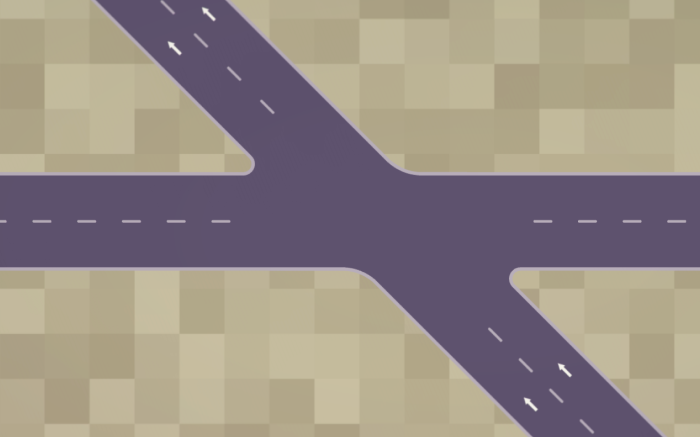


 Opinionated Signal Guide
  29
29
 Voxel Tycoon Helpsheet - Things that may help you

 Award
Award






 Buildings and Vehicles: How They Work


 Collection of Rail Intersections
 The finer details about passenger train stations and bus stations.






 Loading

